County Notice Foreshadows Future Plans to Develop Big Pine Key
Monroe County has issued a notice indicating it is prepared to greenlight a proposed heavy-vehicle training facility in endangered species habitat on Big Pine Key by issuing a “Finding of No Significant Impact” (FONSI).
A FONSI allows federally funded projects to move forward without a full Environmental Impact Statement by certifying that the project will not cause significant environmental harm or adversely affect endangered species or their critical habitat.
Yet, the proposal would pave acres of concrete in the middle of protected endangered species habitat, which exactly the kind of development federal environmental review laws are designed to scrutinize. In fact, the proposed development on this site would currently be prohibited outright due to federal endangered species protections and local regulations, making the County’s conclusion not just questionable, but fundamentally at odds with existing safeguards.
Why Last Stand Is Concerned
Last Stand reviewed the project’s environmental analysis and submitted comments to the County after finding that the County’s determination was not supported by science and that legally required steps were not followed.
The environmental assessment used as the basis for the decision is incomplete and contradictory, and failed to evaluate several key environmental effects — such as traffic, stormwater, and freshwater impacts — that federal law requires to be analyzed before approval.
For example, the project proposes acres of concrete for a semi-truck training facility that would sit directly on top of a freshwater watering hole used by federally protected Key deer, yet the assessment concludes there would be no impact to freshwater resources relied on by deer.
It also asserts that traffic will not have an adverse impact on endangered species, even though vehicle strikes are the leading cause of death for Key deer.
While these were among many substantive issues present in the assessment, Last Stand has also objected to the procedural failures that render the County’s findings legally insufficient.
Note: The County did not produce the assessment used as the basis for their decision. It was provided to them by the applicant, the College of the Florida Keys; it is the County’s responsibility to review the assessment and make a decision as to whether the project’s impact is significant enough to warrant further review.
What This Signals About the Future of Big Pine
Last year, Monroe County expressed its intent to allow the Big Pine/No Name Key Habitat Conservation Plan (HCP), a decades-long conservation framework, to expire. The HCP has been central to protecting endangered species on Big Pine, and it’s the reason Big Pine has been largely insulated from the type of development that has led to severe traffic and environmental degradation elsewhere in the Keys.
The County has repeatedly assured Last Stand and the public that allowing the HCP to expire would not meaningfully change what kinds of development are allowed on Big Pine, because County regulations would continue to provide equivalent protection.
The County’s handling of this project tells a different story.
This project would be prohibited if built today. Advancing it now only makes sense if the County expects existing protections to no longer apply by the time the project moves forward. In other words, this approval signals a future in which development that was previously off-limits may become permissible.
Why Community Watchdogs Matter
The County issued this notice on December 18, with a deadline for public comments of January 2, during the height of the holiday season.
During that period, Last Stand was reviewing hundreds of pages of environmental documents and federal regulations, navigating a complex process involving overlapping federal, state, and local agencies, with funding and authority passing through multiple hands, and narrow deadlines and strict legal standards. Formal objections are only considered if they address specific criteria under federal law, placing a heavy burden on the public to uncover errors quickly and precisely.
Without dedicated watchdogs, projects like this can, and often do, move forward without meaningful scrutiny.
In the coming weeks, you’ll hear more from us about the HCP, and about what residents can do to help keep Big Pine, the people who live here, and the endangered species who rely on it safe.
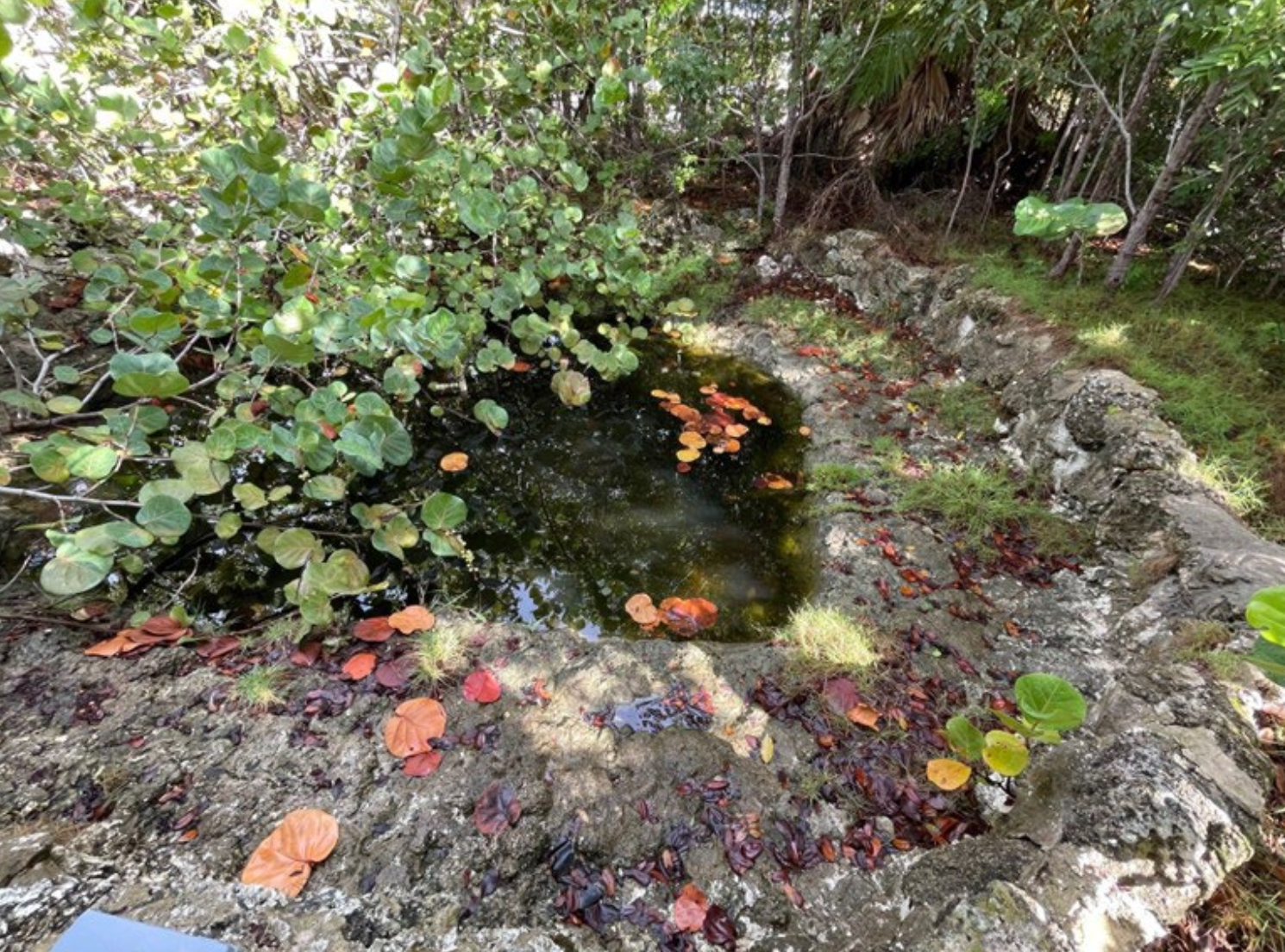
Freshwater well that’s in the footprint of the proposed multi-acre vehicle training pad, known by key deer experts as a popular watering hole. One of the reasons so many endangered species live on Big Pine Key is because the unique freshwater access in Big Pine is what allowed those species to inhabit the area in the first place. The assessment Monroe County is prepared to approve says that the project will not impact freshwater resources for endangered species. No stormwater management is proposed, highlighting concerns that polluted runoff from the semi-truck training facility would pollute the freshwater lens that provides the only source of fresh water for endangered species throughout Big Pine.
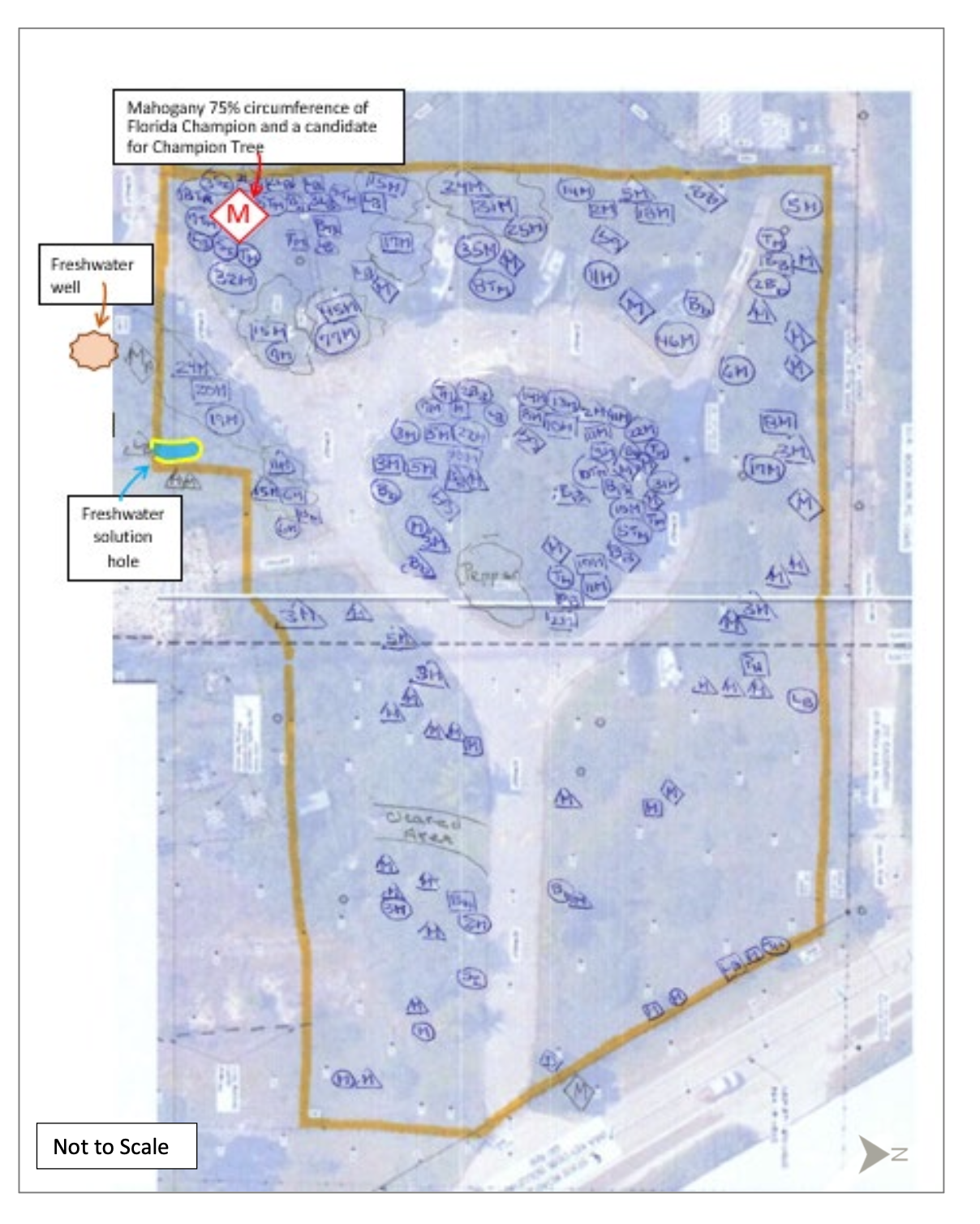
The yellow outline indicated the footprint of the concrete pad, with freshwater sources identified within and adjacent to the pad.
